
All Articles
Personalized Medicine: An emerging healthcare revolution

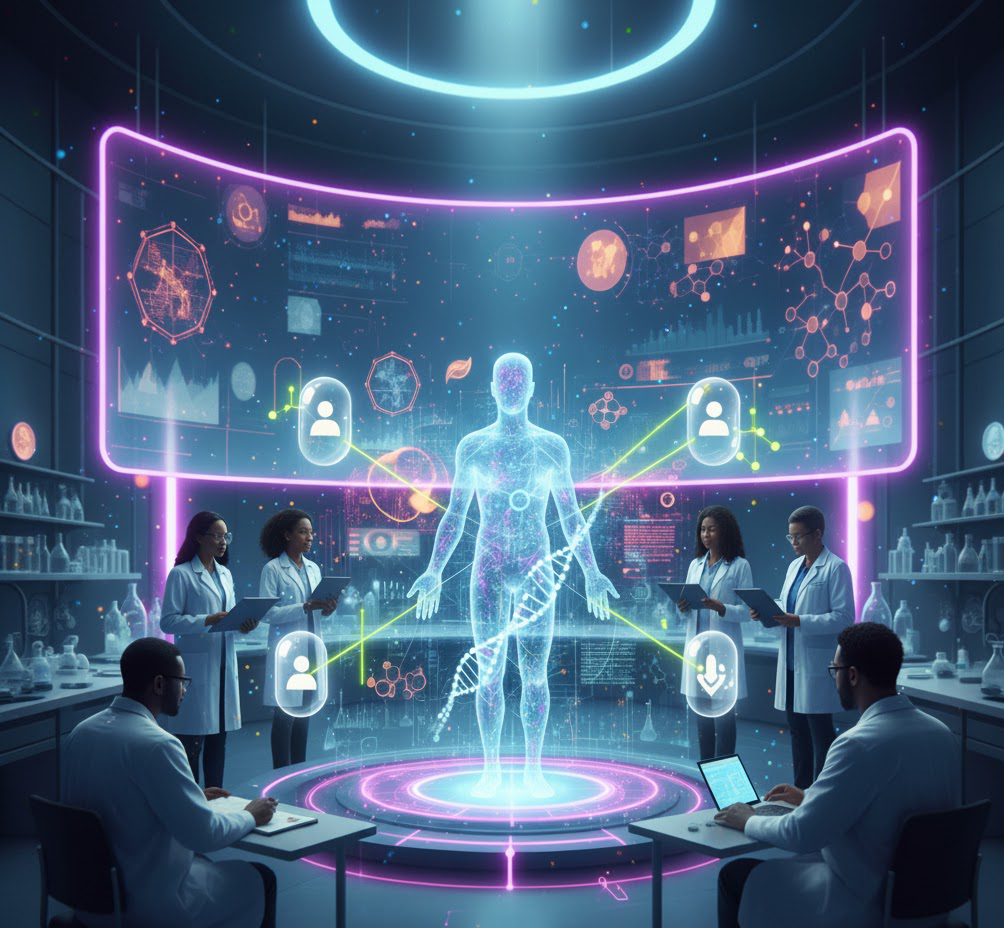
At present, the advancement of technology and life sciences based on research have paved the way for novel aspects in discovering successful treatments for various medical conditions. Rather than proceeding with the traditional one-size-fits-all therapies, customizing treatments based on an individual’s genetic makeup, environmental or lifestyle factors shows promising progress in futuristic medicine. This mainly involves understanding how a person’s genetic background may impact on the diagnosis, etiology, treatment and prevention of various diseases. The importance of tailoring treatments to meet the patient’s requirements could be emphasized by the potential in enhancing the efficacy of the therapy, reducing the adverse effects and ultimately improving the patient outcomes. This approach has the capacity to embrace the genetic uniqueness of each and every individual and treat them in the most suited way to address their conditions successfully. Hence, personalized medicine can be considered as a turning point in modern day medicine.
Personalized or precision medicine greatly creates hopes for those who do not respond to the traditional therapeutic approaches by focusing on satisfying their unmet requirements. The unresponsiveness towards one-size-fits-all type of therapies in some individuals may be occurred due to the unique differences in their genome. Ever since the very first sequencing of the human genome happened as a result of one of the fundamental milestones in scientific research; the Human Genome Project (which was implemented from 1993 to 2003), there has been a rapid development in genetic profiling over the recent years. Genetic profiling allows analyzing an individual’s DNA to identify potential health risks, disease vulnerability and responses to different treatments. Hence, it is obvious how a person’s genetic information could be used to design the most appropriate treatment that addresses the particular clinical condition in the best possible way (Terrie 2023).
Development in molecular biology-related aspects such as DNA sequencing, identification of gene mutations/variations and pharmacogenetics testing along with the development of computational biology-related features such as bioinformatics provide a strong foundation in new innovations such as target therapy. Currently, oncology is a field that more prominently uses such approaches to customize patient treatments. For example, genetic profiling of tumors allows the identification of certain genetic mutations present in the cancer cells. Then, drugs that specifically target the certain cancer-related mutation can be designed to destroy the cancer cells so that normal cells that do not contain the mutated genes may remain unharmed. Rather than providing a cancer patient with the usual invasive treatment procedures, incorporating such innovative techniques into practice ensures that the patient’s outcomes are comparatively improved while facing less potential adverse effects. Several benefits such as early detection of cancers, identification of susceptible individuals, accurate diagnosis of cancers, selection of the most appropriate therapy and assessment of the patient’s response to the therapy could be obtained by applying personalized medicine into cancer treatment approaches (Terrie 2023). However, personalized medicine is not just limited to oncology. There is a range of clinical conditions that could possibly be successfully treated with this approach based on current and future research. This shows promising results in personalizing early detection and prevention strategies of diseases as well (Goetz & Schork 2018). Individualized treatments also assist in minimizing adverse effects of drugs (Ex: reducing the risk of drug toxicity based on the responses of the patient’s genome), increasing the efficacy of the treatments and facilitating research and development in terms of drug discovery (Stefanicka-Wojtas & Kurpas 2023).
Although personalized medicine shows great positivity towards the future of drug discovery and therapeutic approaches, there are also certain barriers associated with this aspect. This could be highly expensive in terms of research and application in real life. There may also be ethical issues regarding sequencing genomes of the individuals that may lead to problems in the privacy of patient data. Hence, this should be very carefully monitored and implemented in order to minimize the potential adverse effects. In general, personalized medicine can be considered as a revolutionary and as well as an evolutionary aspect in futuristic medicine if implemented and monitored effectively.
References
Goetz, L.H., Schork, N.J. 2018 ‘Personalized Medicine: Motivation, Challenges and Progress’.
Fertil Steri, 109(6): 952–963
Stefanicka-Wojtas D, Kurpas D. 2023 ‘Personalised Medicine-Implementation to the Healthcare System in Europe (Focus Group Discussions)’. J Pers Med, 13(3):380.
Terrie, Y.C. 2023 ‘Advancing Research in Personalized Medicine’. US Pharm,48(2):31-36.

Ms. S. Nishika Bandara
Demonstrator
Faculty of Medicine, University of Kelaniya, Sri Lanka
Oxford Brookes University (BCAS Campus)
