
All Articles
Organs-on-chip

Pharmaceutical drug or medicine is a chemical substance used to treat, cure, prevent, or diagnose a disease or to promote well-being of living systems. Current society won’t survive without medicine. The pharmaceutical drug development process is a time consume (nearly 10 years), complex cycle. Main stages of drug development cycle are drug discovery, preclinical and clinical development, and regulatory approval. Normally, scientist are spending 2-3 years in drug discovery stage to identify the most suitable candidate compound(s) from the thousands of target compounds and formulations (~15,000 – 20,000). After recognizing the lead target few compounds (20 – 100 compounds) move forward to the preclinical stage where conduct in vitro assays to determine the toxicology and pharmacokinetics of those selected compounds. Scientists are use animal cell culture technology to conduct in vitro assays and estimate the toxicity level of those target compounds. Generally, toxicological in vitro assays are mainly target on one organ and use that organ cells to perform experiments. Such as when scientists are trying to develop drug for kidney disease, they use kidney cell lines (Ex: HEK 293, MDCK cell lines) to perform toxicological assays. Most of the time scientist are use 2D animal cell cultures for in vitro assays. Therefore, these toxicological in vitro assays won’t provide the overall effect of the potent drug compound in the actual scenario within the human body.
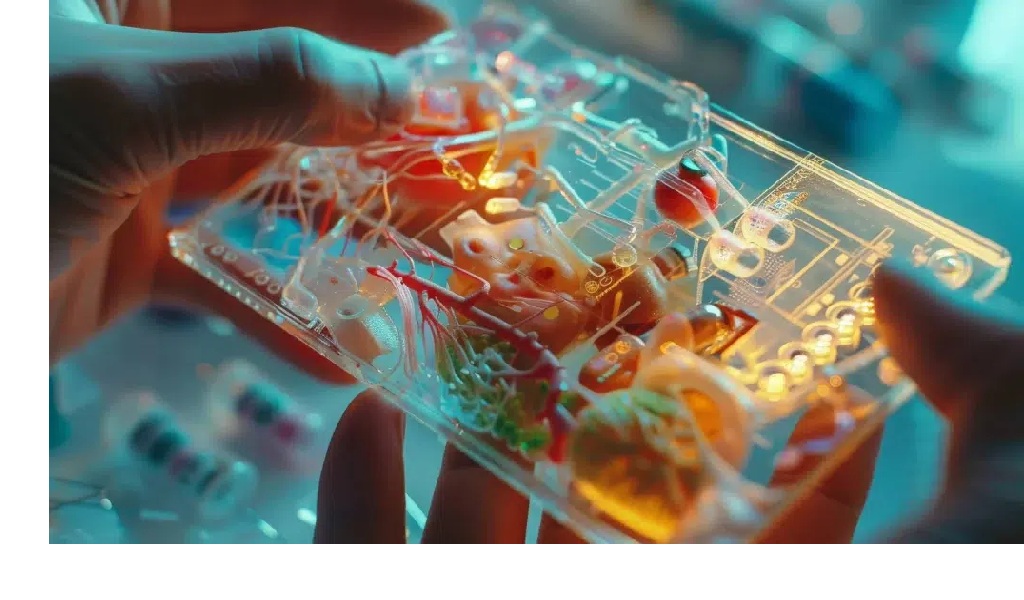
To address this issues and speedup the drug development process, researchers designed and developed an organ-on-a-chip. It build by combining 3D microfluidic cell cultures from different multi organs via multi channels on a circuit. Gut, liver, kidney, heart, lung, brain, bone and etc. are few organs stimulated into an organ-on-a-chip to use in drug screening process.
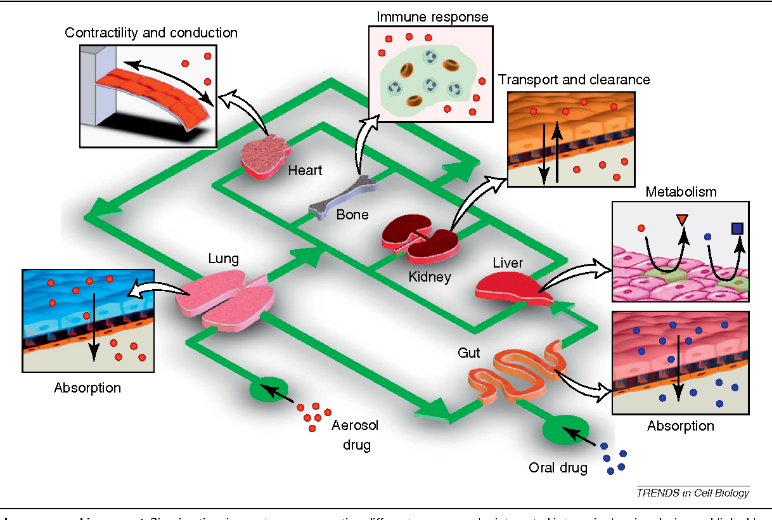
Figure 1: an organ-on-a-chip model
As example, during the oral drug testing process, researchers able to introduce the drug compound from one end of the chip, then it will circulate via microfluidic channels and pass the different 3D cells of various organs. From one single experiment researchers could identify toxicological data and pharmacokinetics of particular drug in each organ and overall effect on an organ system. U.S. Food and Drug Administration, several leading Universities and research institutes are working on organs-on-a-chips project. So far some organs have been stimulated effectively on the organs-on-a-chips, but some were fail like lung and heart due to their natural cell movement behavior. Further research proceeding to improve the organs-on-a-chips to use in pharmaceutical industries.

Dr. Sumudu Mapa
Senior lecturer
Faculty of Technology
University of Sri Jayewardenepura
