
All Articles
Green Chemistry in Education: Making Safer Laboratories for Sustainable Future

Chemistry education emphasizes a practical laboratory experience, where students gain insights into chemical reactions and develop essential technical skills. Laboratory practical are an essential component in science education, especially in chemistry. However, many laboratory chemicals often pose risks to human health and the environment, involving a variety of toxic and hazardous substances.
Green chemistry focuses on designing and synthesizing chemical products that reduce or eliminate hazardous substances. This approach makes lab safer while minimizing waste, reducing disposal needs, and promoting sustainability. By applying green chemistry principles in schools and higher education institutes can transform labs into safer environments, and preparing students more sustainable future where they can use their knowledge in industry and academia. Currently, many industries use these practices in processes such as pharmaceutical, agrochemical, and polymer industries. Pfizer, a world-leading pharmaceutical company, is able to minimize their waste generation significantly by incorporating green chemistry principles.
The green chemistry comprises twelve principles, which were introduced by Paul Anatas and John C. Warner in 1998 (Figure 1).
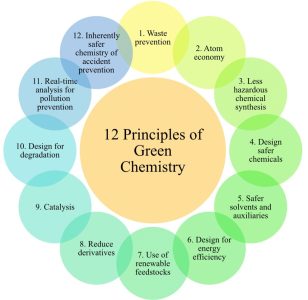
Figure 1: Twelve principles of green chemistry.
Key principles include preventing waste, minimizing the formation of byproducts, designing energy-efficient processes, using catalysis, using safer solvents, and employing renewable materials.
Additionally, two primary green chemistry metrics, atom economy (AE) and environmental impact factor (E-factor), are used to assess the sustainability of chemical processes. Atom economy calculates the percentage of raw material incorporated into the final product (MW of product/sum of MW of starting materials), while E-factor assesses the waste generated per kilogram of product (kg waste/kg product). AE is a theoretical value that can be used to evaluate the efficiency of a chemical reaction. The E-factor can be used to assess the environmental acceptability of the chemical reaction and manufacturing process. Hence, these metrics allow students to evaluate chemical reactions in terms of efficiency and environmental impact.
Today, industries around the world are increasingly integrating green chemistry principles when designing products to help solve important socio-economic and environmental challenges. Incorporating green chemistry principles into school and university curricula labs teaches students about waste reduction, the use of safer solvents, safer synthesis methods, and sustainable practices.This approach helps students learn science better and encourages them to be responsible and eco-friendly in their future as chemists.
denepura

Dr. K.G.U.R. Kumarasinghe
Senior Lecturer
Department of Chemistry
Faculty of Applied Sciences
University of Sri Jayewardhenepura
