
All Articles
From Waste to Wonder: Exploring the Role of Fascinating Chitin Nanofibers in Eco-Friendly Building!


| Figure 1: A piece of commercial EPS concrete block (Copyright: https://www.hbhscn.com/eps-concrete-sandwich-wall-panel_p75.html) |
In recent years, the construction industry has been making steps toward sustainability by exploring using natural materials in cement composites (a combination of two or more materials with different physical and chemical properties). This move not only aims to create more eco-friendly building solutions but also focuses on enhancing mechanical properties while maintaining the environmental benefits of these materials [1].
Expanded Polystyrene (EPS) concrete is a mixture of cement, water, sand, and additives added with EPS, resulting in a lightweight cement composite with densities ranging from 400 to 1850 kg/m3 [2, 3]. Nonetheless, it’s constrained by its low compressive strength and density in the construction sector for wider applications [4]. In order to address these problems, researchers are looking for creative solutions, specifically by combining nanotechnology.
Nanotechnology offers numerous opportunities to improve the desired properties of cement composites. The utilization of biobased nanomaterials, which range in size from 1-100 nm, supports addressing different challenges in the construction industry. Out of several biobased nanomaterials, chitin nanofibers (ChNFs) are especially remarkable.
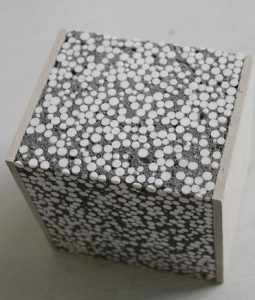
Figure 1: A piece of commercial EPS concrete block (Copyright: https://www.hbhscn.com/eps-concrete-sandwich-wall-panel_p75.html)
Chitin can be obtained mainly from the shells of crustaceans such as crabs providing a sustainable and efficient option for enhancing cement composites. The ability to transform chitin into nanofibers using techniques such as ultrasonication enhances its functionality and applicability.

Additionally, utilizing chitin nanofibers sourced from seafood waste offers a novel solution for waste disposal and improves building materials. Some standout properties of chitin nanofibers include:
- High-specific surface area: Allows for better interaction within the composite.
- Low density: Ensures that the composite remains lightweight.
- Nontoxicity and renewability: Offers an eco-friendly profile consistent with green building goals [5].
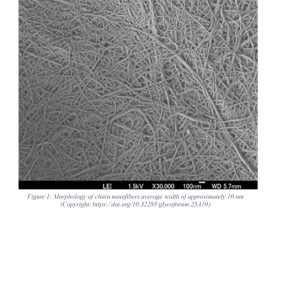
In a recent study conducted in Sri Lanka, researchers explored the potential of chitin nanofibers made from seafood industry waste in enhancing the strength and durability of an EPS cement composite. These researchers performed a set of experiments, including compression and water absorption tests, to verify the efficiency of chitin nanofibers in EPS cement blend, following the American Society for Testing Materials (ASTM) guidelines. ChNFs were incorporated by varying concentrations of 0.025%, 0.05%, and 0.075% relative to the cement content added to the composite mixture. Significant findings showed that adding just 0.075% ChNFs to the composite led to noteworthy enhancements in strength and durability, providing that even a small quantity of these natural nanomaterials can greatly improve cement-based composites.
This study not only showcases the potential of ChNFs in the use of building materials but also presents a sustainable approach to managing seafood waste. Thus, the use of ChNFs has the possibility to revolutionize the construction industry by creating strong, efficient, and environmentally friendly composites which can lead to a sustainable world, ensuring a bright future for building construction.
References:
- Nagalakshmaiah, M. et al. (2019) ‘Biocomposites’, Green Composites for Automotive Applications, pp. 197–215. doi:10.1016/b978-0-08-102177-4.00009-4.
- Bollakayala, V.L. et al. (2022) ‘Preparation and characterization of green composites based on expanded polystyrene waste and biomass: Sustainable Management Approach’, Materials Today: Proceedings, 66, pp. 1762–1768. doi:10.1016/j.matpr.2022.05.275.
- Lim, Y.S. et al. (2021) ‘Life cycle assessment of expanded polystyrene’, IOP Conference Series: Earth and Environmental Science, 920(1), p. 012030. doi:10.1088/1755-1315/920/1/012030.
- Prasittisopin, L., Termkhajornkit, P. and Kim, Y.H. (2022) ‘Review of concrete with expanded polystyrene (EPS): Performance and environmental aspects’, Journal of Cleaner Production, 366, p. 132919. doi:10.1016/j.jclepro.2022.132919.
- Haider, Md.M. et al. (2022) ‘Impact of chitin nanofibers and nanocrystals from waste shrimp shells on mechanical properties, setting time, and late-age hydration of Mortar’, Scientific Reports, 12(1). doi:10.1038/s41598-022-24366-4.

U. K. M. Dananjaya and Dr. Danushika. C. Manatunga,
Department of Biosystems Technology
Faculty of Technology
University of Sri Jayewardenepura
