
All Articles
A Step Toward Radiopharmaceutical FDG Production in Sri Lanka.

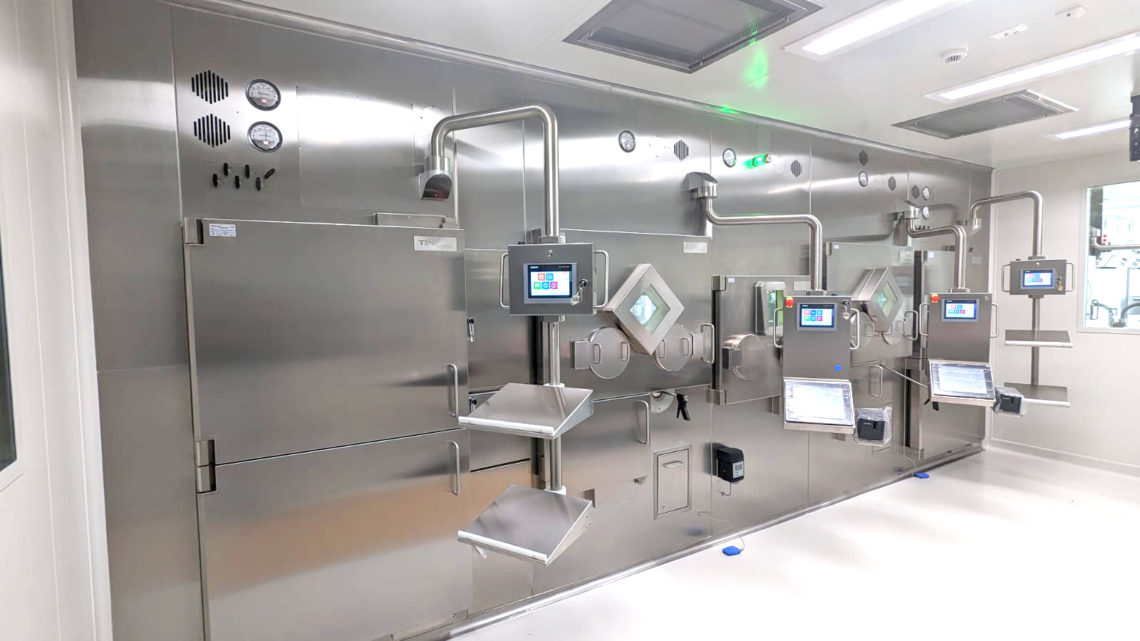
Initiating a cyclotron facility is a revolutionary journey in healthcare in Sri Lanka. It is targeted at the production of Fluorodeoxyglucose (FDG), a primary requirement for Positron Emission Tomography PET scans.
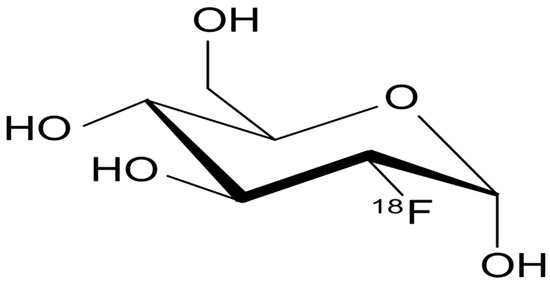
FDG is widely used radiopharmaceuticals for detecting early-stage tumors. To produce FDG, a cyclotron accelerates protons to high energy, which are then bombarded onto oxygen-18. Through a nuclear reaction, this produces flourin-18, a radio-isotope. Due to the short half-life (110 minutes) of 18F, it is commonly attached to a glucose analog, as shown in Figure 1. When administered FDG, accumulates in cells with high metabolic rates, like cancer cells, and emits positrons. These emitted positrons collide with electrons, undergoes the electron-positron pair annihilation, and emit gamma photons. These photons are detected by PET, which processes an image based on photon concentration, indicating high glucose cells, such as active tumors. This process is the combination of particle acceleration, nuclear decay, particle detection, and image processing.
A cyclotron is a particle accelerator of semicircular electrodes called “dees”. The alternative electric field across the gap between the dees accelerates particles, while the magnetic field causes them to travel in a circular path as shown in Figure 2. The particles gain energy, accelerating across the gap and expanding outward in a spiral motion. At the edge of the dees, particles can be extracted as a desired high-energy beam. For the FDG production, protons are accelerated through the cyclotron to an energy of 10-20 MeV before being directed to bombarded on oxygen-18. Cyclotrons cannot accelerate particles to speeds approaching the speed of light, which limits the production of radioisotopes that require higher energy. Due to the short half-life of 18F, the cyclotrons are ideally located near to the PET imaging centers. Cyclotron facility requires significant capital investment for installation, radiation shielding, and maintenance.
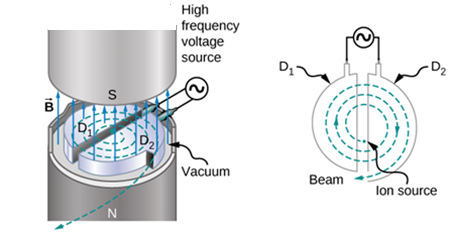
Figure 2
The Sri Lanka National Atomic Energy Authority initiated a project to install a cyclotron in Sri Lanka primarily for FDG production. Relying on imported FDG is challenging due to its short half-life, which leads to its effectiveness dropping by 97% during transport. Currently, only about 5% of the patients can undergo PET/CT scans using imported FDG. The initiative step of installing a cyclotron in Sri Lanka will be a significant advancement in healthcare, as it will expand advanced diagnostic techniques and reduce the cost per PET/CT scan.

Dr. W.Wasanthi P De Silva
Department of Physics
University of Sri Jayewardenepura.
