
All Articles
Application of Augmented Reality in Modern Healthcare: Revolutionizing Patient Care and Medical Practices

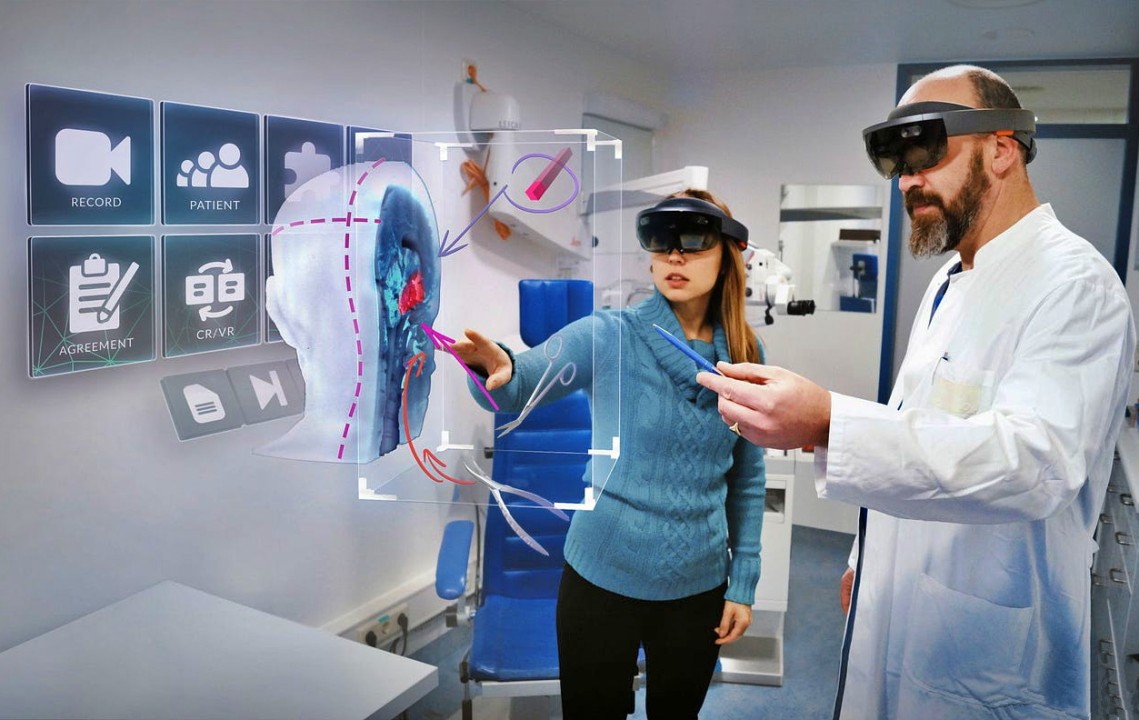
The current 21st century is heading with the most innovative and attractive information and communication technology-oriented lifestyle. Augmented Reality (AR) is one of the leading technological aspects in the modern era. The healthcare sector is undergoing a rapid transformation thanks to AR, which offers cutting-edge solutions for patient care, diagnostics, treatment planning, surgery, and medical education. Using tools/equipment like smartphones, tablets, or specialist headsets, AR overlays digital data on the physical world, enabling real-time viewing and interaction with medical data by healthcare practitioners. This technology, which was first made popular by gaming and entertainment, has enormous potential to completely transform the contemporary healthcare sector.
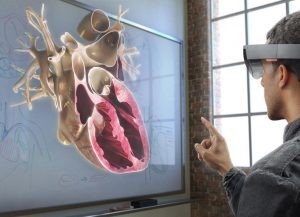
Figure 1: Usage of AR capabilities of the HoloLens in medical education
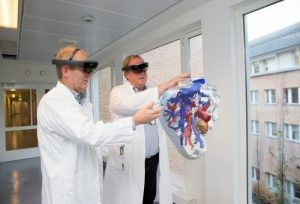
Figure 2: Usage of AR capabilities of the HoloLens in medical education
[Reference for Images 01 and 02: https://fowmedia.com/microsofts-hololens-changing-medicine-surgery/]
AR in Surgery: Precision and Accuracy
Among the most well-known uses of AR is in surgery, where it can increase precision and accuracy. During surgery, surgeons can utilize AR to see internal organs, bones, and tissues superimposed on the patient’s body. Surgeons can enhance patient outcomes, lower risks, and make more accurate incisions with the aid of real-time imaging.
For instance, by showing 3D models of the patient’s bones and joints, AR helps in implant placement in orthopedic surgery. Through sophisticated overlays of the patient’s anatomy, Medivis’ SurgicalAR tool helps surgeons guide intricate surgeries while minimizing mistakes and cutting down on operating time. During brain surgery, neurosurgeons can potentially employ AR to show crucial data, including the location of tumors and blood vessels, to a patient. Figure 3 is an application of Medivis SurgicalAR.
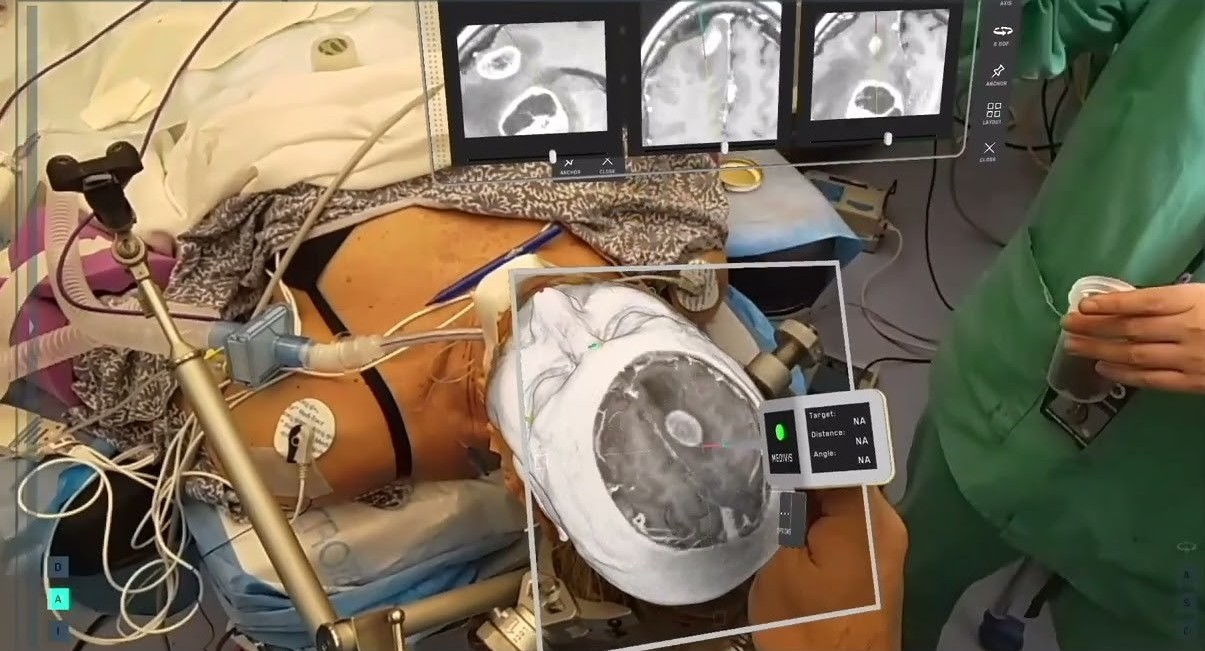
Figure 3: Usage of Medivis SurgicalAR
[Reference: https://www.youtube.com/watch?app=desktop&v=3CdytepOXFg]
Improving Diagnosis and Treatment Planning
By combining other imaging technologies like MRI, X-ray, and ultrasound, AR increases the accuracy of diagnoses. By superimposing these scans on a patient’s body, medical professionals can more precisely evaluate health issues by seeing interior structures in three dimensions. For instance, a 3D representation of the heart can be projected onto a patient’s chest using augmented reality in cardiology. This makes it possible for medical professionals to schedule surgeries like heart valve replacements and catheterizations and detect illnesses more precisely.
By enabling physicians to practice surgeries before doing them, AR also aids in treatment planning. This lowers the chance of complications, aids in the planning of intricate surgical procedures, and raises the standard of care generally.
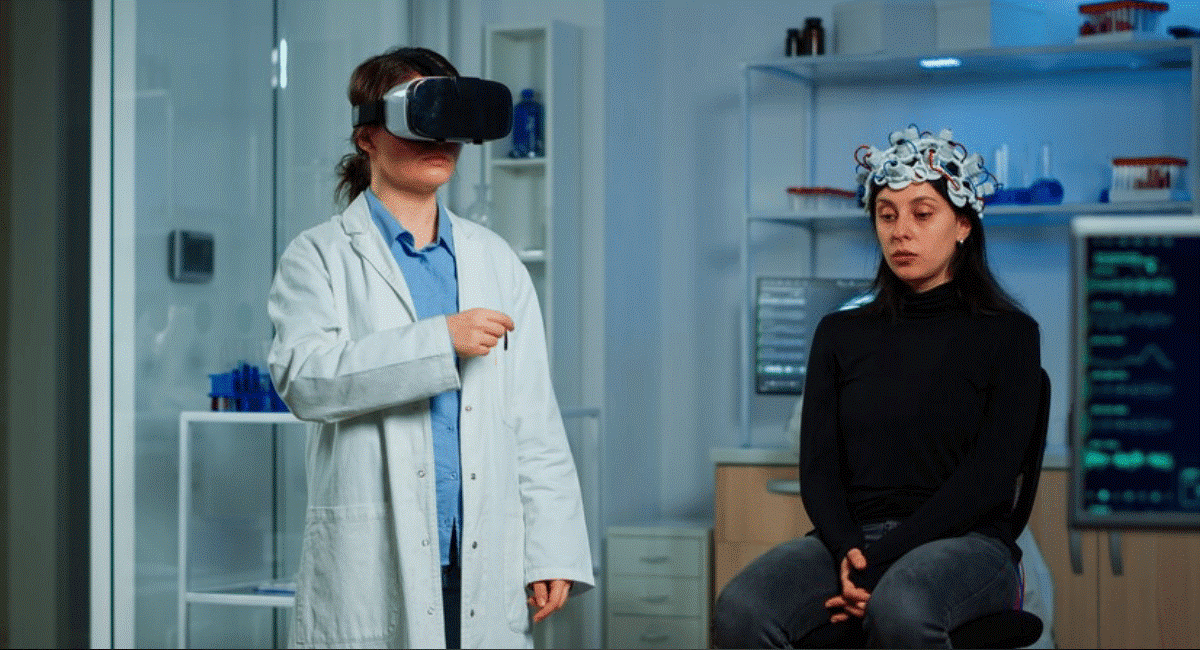
Figure 4: VR training as a Tool for Psychological Preparation before Surgery
[Reference: https://arvrsol.com/vr-training-as-a-tool-for-psychological-preparation-before-surgery-2/]
AR in Patient Rehabilitation and Care
AR can also improve patient care, especially in rehabilitation. For example, stroke patients can use AR-guided rehabilitation exercises to regain motor function. These exercises are often fun, which makes the recovery process more enjoyable. AR tracks the patient’s movements, provides real-time feedback, and adjusts the difficulty level based on the patient’s progress.
AR is also used to inform patients about their health and treatment plans. Patients can imagine how a surgery will go or how the body will heal after surgery, helping them make informed decisions and reduce fear.
Summary
Modern medicine is undergoing a transformation thanks to augmented reality, which enhances medical education, boosts surgical accuracy, improves diagnostic precision, and aids in patient treatment and rehabilitation. Future patient care will be more effective, precise, and individualized as augmented reality (AR) technology advances and finds wider and wider use in the medical industry.

Mr. W.M.C.J.T. Kithulwatta
Lecturer and Head of the Department,
Department of Information and Communication Technology,
Faculty of Technological Studies,
Uva Wellassa University of Sri Lanka
